
 EN

Stocare Energiae ad Longum Tempus: Quando Hydrogenium in Examinem Optionum Introire Debet
For renewable-energy project teams, long duration energy storage is not one technology decision. It is a planning question: how long must energy remain available, how often will the asset cycle, and what service must it provide when renewable output falls? Hydrogen should enter the options review when those answers point beyond daily shifting toward multi-day resilience, infrequent deep discharge, or seasonal balancing.
The U.S. Department of Energy describes long duration energy storage as storage able to deliver electricity for 10 hours or more. That threshold is useful for scoping, but it is not an automatic reason to choose hydrogen. A project needing 10 to 16 hours every day may reach a different conclusion from one that needs dispatch across several low-renewable days. The useful comparison starts with the operating problem, not with a preferred technology.
Start With the Energy Gap, Not the Equipment
Mappāre interstitium quod systema ante comparationem technologiarum implēre dēbet. Notāre potestātem necessāriam, energiam totam necessāriam, tempus cuiuslibet eventūs, numerum eventuum per annum, et tempus acceptābile recuperātiōnis inter ea. Solūtiō quae in bateriīs fundātur fortasse optima est cum eadem fenestra descendentis repetitur cotīdiē. Hydrogenium magis diligenter explorandum est cum interstitium energiae fit longum, irregulāre, aut ad schemata meteorologica ligātum quae diēs continuāre possunt.
Exemplī grātiā, locus fortasse indiget auxiliāriā potentiā dum rārī interrumpuntur rete, captiōne curtailment renōvābilium dum mēnsēs selectī sunt, aut productiōne firmā per longum deficitum ventī et solis. In his casibus, augēre energiam stōratam potest esse praecipuum quam sōlum maximī efficācia cyclī. Discussiō DOE de hydrogeniō LDES cōnsiderat stōrāgium a 12 horīs usque ad 7 diēs et explicat durātiōnem ut output continuus, plēnē notātus ex systemāte plēnē incitātō. Hanc dēfīnītiōnem utere ut ciclus operātiōnis in omnī recēnsiōne optiōnum explicitus fiat.
Signals That Hydrogen Belongs in a Long Duration Energy Storage Review
Add hydrogen to a long duration energy storage shortlist when several of the following conditions apply:
- Multi-day or seasonal energy shifting is plausible. The project must retain energy beyond a routine overnight or daily dispatch window.
- Long storage time matters more than frequent cycling. The asset may sit charged for extended periods and discharge during exceptional events or low-generation intervals.
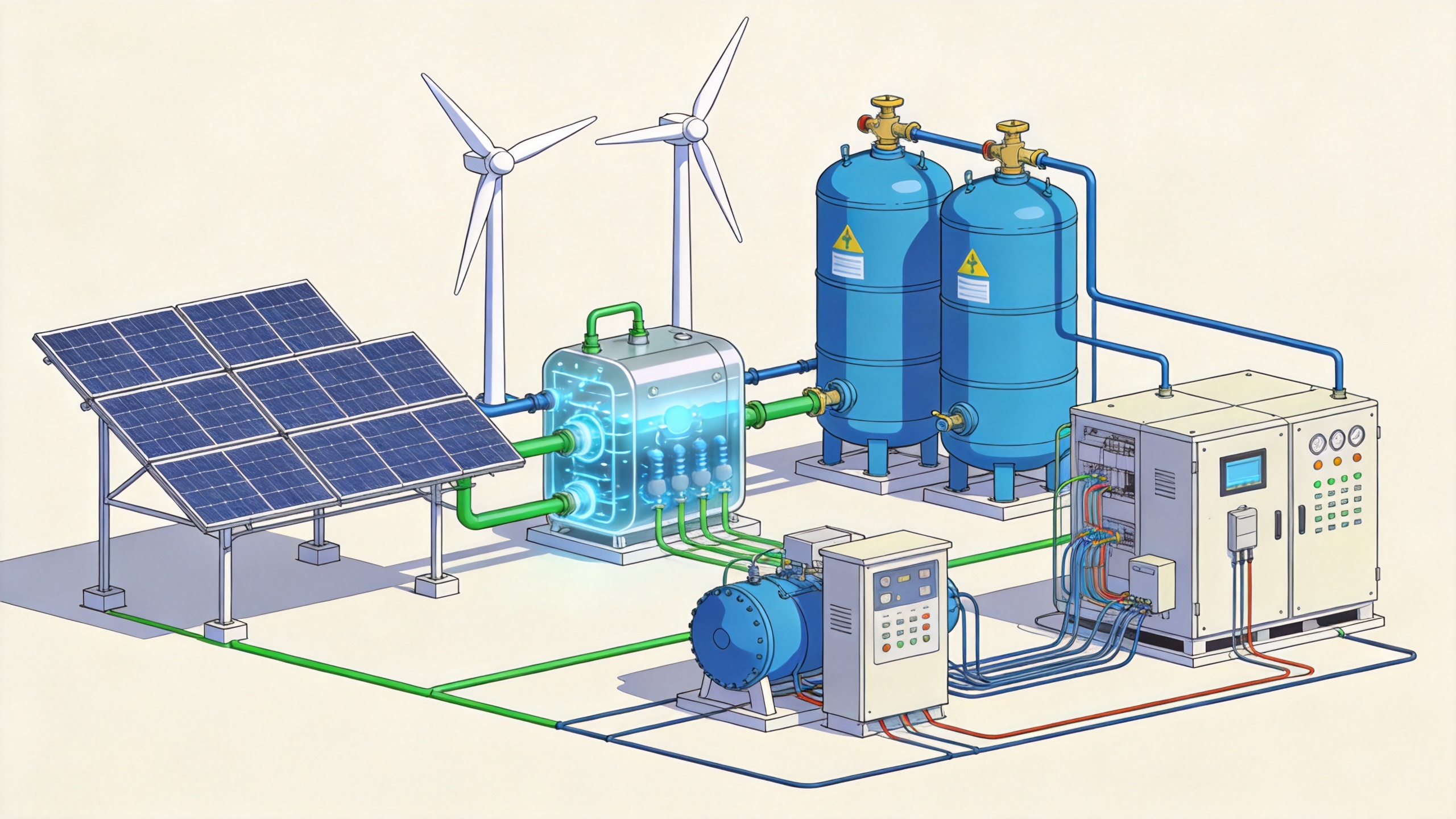
- Power and energy capacity need separate scaling decisions. The project team needs to assess electrolyzer capacity, hydrogen storage quantity, and reconversion capacity as related but distinct design choices.
- There is usable low-carbon electricity for charging. Un profil credibilis de provision pro electricitate renouabilis excedens est essentialis pro conceptu del systema.
- Le planification del sito e del operationes pote accommodar le via complete. Le recension pote tractar le aqua, le compression o le methodo de stoccage, le ingeneria de securitate, le controles, le maintenance e le equipamento pro reconversion.
Iste signalos non prova que hydrogeno es le solution seligite. Illos justifica su evaluation in conjunction con altere long duration energy storage approches, ut le squadra non excludat un via simplicemente quia le prime comparation se concentrava super le cyclage diurne.
Ubi le hydrogeno pote esser un mal prime ajustamento
Hydrogen non est automato optio recta pro omni systemate conservationis energiae renovabilis. Si casus operationis postulat expeditionem praedictam, altam in frequentia, brevem in duratione, aequipe primum probare solutiones quae ad hunc modum sunt designatae. Similiter, recensio incompleta est si tantum hydrogenium conservatum computat et energiam necessariam pro electrolysi, conditionamento conservationis, et reconversione electricitatis negligit.
Cave cum proiectum nullam fontem incursionis definitam habet, nullum conceptum loci practicum pro systematibus conservationis et securitatis, aut nullum usum clarum pro energia ultra brevem et recurrentem culmen. Haec non sunt rationes ut hydrogenium perpetuo reiciatur; sunt rationes ut declaratio necessitatis antequam propositiones ab suppeditatoribus petuntur perpoliatur.
Compara totam finem systematis
Fidem gerens long duration energy storage comparatio unum communem terminum pro omni optione utitur. Pro hydrogenio, includere inpensam electricitatis, electrolyzer, tractationem aquae ubi relevans, modum storationis, conversionem potentiae aut apparatus ad usum finalem, controles, interconnectionem, designum securitatis, et planum operationis. Separatio horum elementorum auxiliat turmas procurement ut evitent comparationem systematis completi in una parte cum sub-systemate partiali in altera.
| Quaestio | Cur recensio mutatur |
|---|---|
| Quae est potentia requisa durante discharge? | Hoc formam dat requisito capacitatis reconversionis aut usus finalis. |
| Quot horis aut diebus energia esse debet? | Hoc statuit inventarium energiae et casum durationis storationis. |
| Quotiens systema cyclabit? | Hoc distinguit mutationem quotidianam a resilientia aut usu saisonali. |
| Quae electricitas renovabilis pro charging disponibilis est? | Hoc probat num profilus charging suadet modello operationis intento. |
| Quae constrictiones loci applicari possunt? | It brings storage approach, safety engineering, utilities, and logistics into the same decision. |
Questions to Ask a Hydrogen Storage Supplier
Once hydrogen is in scope, ask suppliers for information that allows like-for-like comparison rather than a headline claim. Request a proposed system boundary, the assumed charging profile, the defined discharge duty cycle, the storage approach, interfaces with power equipment, site requirements, safety documentation, controls philosophy, maintenance assumptions, and the data needed to model annual operation.
For teams exploring a metal-hydride-based route, the product discussion should still begin with the site’s load and duration. Hyto Energy’s Unitas Hydrogeni Magna can be evaluated as part of that broader system conversation. Ask how the proposed storage unit interfaces with the hydrogen source and the intended energy-use equipment; do not infer performance, approvals, or project fit from a product name alone.
Move From a Technology Debate to a Decision Brief
The practical output of an early long duration energy storage review is a decision brief, not a winner announced too soon. State the duration cases to be tested, the charge-energy assumptions, the discharge services, the cycling pattern, the site constraints, and the evidence each supplier must provide. Then compare candidates against the same operating cases.
Hydrogen should enter the review when a project has a credible need to hold renewable energy over long, uneven, or seasonal intervals and can assess the full conversion-and-storage pathway. If the need is mainly daily and repeatable, keep the comparison anchored to that reality. Either way, a clearly defined duty cycle gives engineering, procurement, and suppliers a more useful starting point for evaluating a renewable energy storage system.