 EN

Hydrogen Production from Renewable Energy Sources: System Integration Basics
Hydrogen production from renewable energy sources is often described as a simple chain: use solar or wind electricity, split water, and store the hydrogen. In a real project, however, the outcome depends on how that chain is integrated. From a system-integration perspective, the important question is not only whether an electrolyzer can make hydrogen, but whether renewable generation, power electronics, water treatment, storage, controls, and the intended load can operate as one coordinated system.
This matters especially in hydrogen microgrid systems. Solar output changes through the day, wind output can change quickly, and the hydrogen demand may be steady, scheduled, or intermittent. A well-planned system treats those differences as operating decisions, not as isolated equipment problems.
The renewable-to-hydrogen pathway
At its core, hydrogen production from renewable energy sources uses electricity from renewable generation to power an electrolyzer. Electrolysis splits water into hydrogen and oxygen. That description is accurate, but it leaves out the interfaces that determine whether the system is practical at a site.
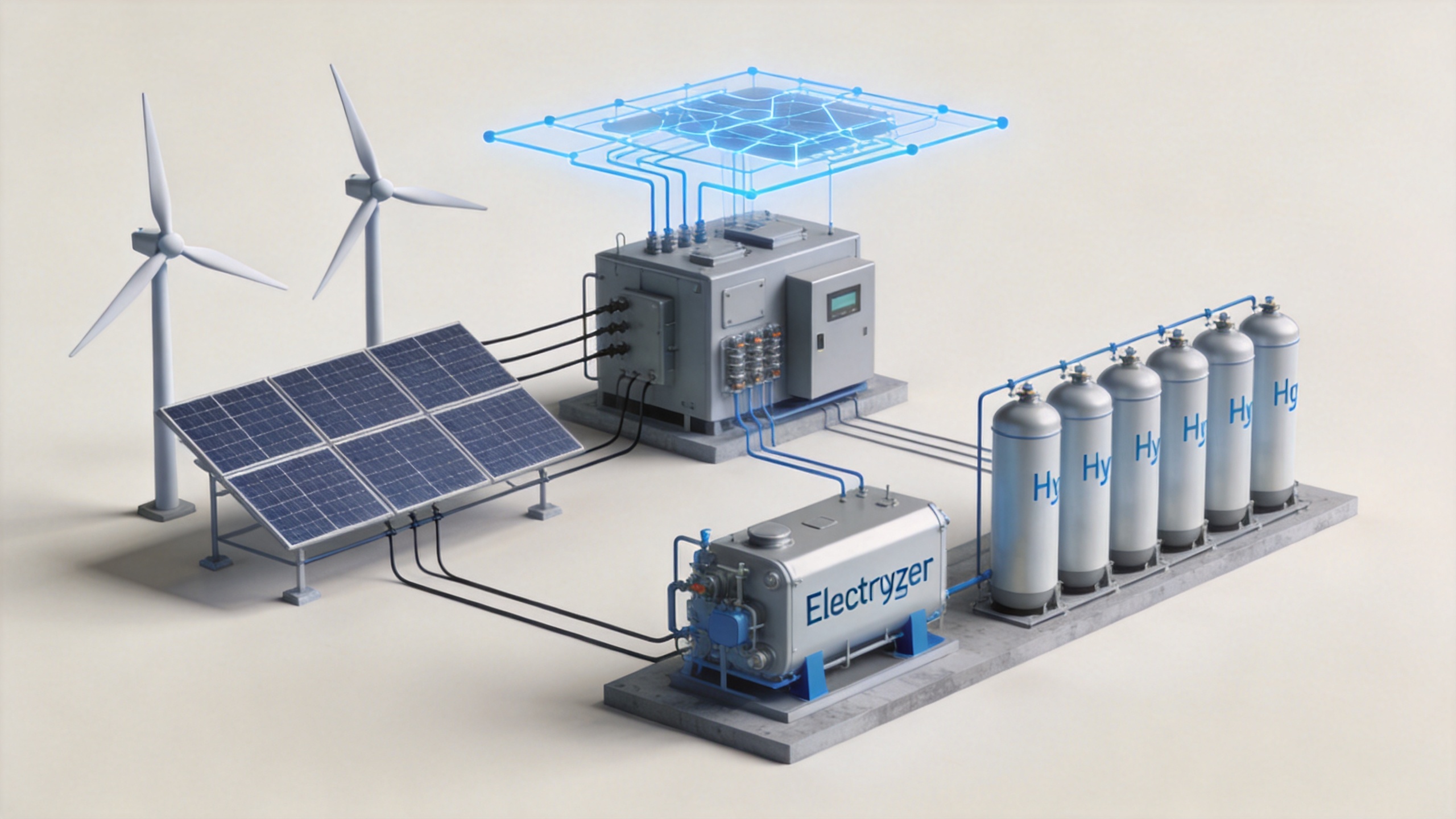
A typical pathway includes renewable generation, an electrical collection and conversion layer, an electrolyzer balance of plant, hydrogen treatment and storage, and an energy-management system. When hydrogen production using solar energy is part of the plan, the DC and AC architecture, solar production profile, curtailment logic, and available grid connection all affect how much useful operating time the electrolyzer receives.
A practical way to map the process is to follow the decisions in order:
- Measure or forecast renewable electricity available to the project.
- Allocate power among the electrolyzer, other site loads, battery storage, and export or import points.
- Operate the electrolyzer within its approved power, temperature, water-quality, and start-stop limits.
- Condition, compress, store, or route the hydrogen according to the downstream use case.
- Use controls and operating data to refine the next dispatch decision.
Electrolysis itself is not a source of energy; it converts electrical energy into chemical energy. For that reason, the renewable electricity profile and the dispatch strategy belong in the same early-stage discussion as the electrolyzer.
Why system integration matters more than a component list
A single efficiency number is useful, but it does not settle the design question. Whether hydrogen production from renewable energy sources fits a project depends on the whole operating boundary: renewable variability, hydrogen demand, grid rules, storage duration, water conditions, and control priorities. A highly capable component cannot by itself resolve a mismatch between available power and the required delivery schedule.
For example, an electrolyzer may be able to follow changing power quickly, but the project still needs decisions about minimum operating load, start-stop frequency, thermal management, and hydrogen buffering. NREL grid-integration material has shown fast system-level response in a 120 kW PEM study context; that is a helpful illustration of dynamic capability, not a universal design specification. The applicable response and operating range must be verified for the selected equipment and site conditions.
Water is another integration point. The chemistry of electrolysis requires about 9 litres of water for each kilogram of hydrogen, while actual site design must also consider pretreatment, recirculation, cooling, discharge, and local water availability. Discussing hydrogen production using solar energy without discussing water quality and balance-of-plant requirements can make a project look simpler than it is.
Core building blocks in a hydrogen microgrid
Renewable generation and power conversion
Solar PV, wind, or a mixed portfolio supplies the energy. The conversion and protection architecture must align voltage, frequency, power quality, and operating modes with the electrolyzer and other loads. In an awareness-stage project, the first task is usually to map generation profiles and planned operating windows rather than to assume that rated renewable capacity equals available electrolyzer input.
Electrolyzer and balance of plant
The electrolyzer stack is central, but it is part of a larger package that can include water purification, circulation, gas-liquid separation, cooling, controls, and safety-related instrumentation. When assessing hydrogen production from renewable energy sources, specify the operating envelope and interfaces before comparing equipment configurations. This avoids treating a stack rating as a complete system design.
Hydrogen handling and storage
Hydrogen storage creates a time bridge between variable power and later demand. The appropriate storage approach depends on the target pressure, required duration, delivery pattern, site constraints, and safety review. In a microgrid, storage is not merely downstream hardware; it influences when the electrolyzer should run and when renewable electricity should be reserved for other loads.
Energy management and site controls
The energy-management system links forecasts, metering, device states, and operating priorities. It can decide when to use renewable power directly, when to charge a battery, when to produce hydrogen, and when to import or export electricity where those options exist. Your objective may be continuous hydrogen supply, or it may be to make productive use of variable renewable power. The control logic should be designed around that objective.
A practical integration sequence
Early planning works better when it starts with the application instead of a product list. Start by defining the hydrogen demand profile: daily quantity, pressure, purity, delivery windows, and tolerance for interruption. Then describe the available renewable resources by time of day and season, along with any grid connection and curtailment conditions.
Next, make the timing mismatch visible. If solar production peaks before the hydrogen load, storage or a different dispatch schedule may be required. If renewable production is highly variable, the selected electrolyzer and control strategy need to accommodate the relevant operating pattern. If dependable supply is critical, planners may evaluate a mix of renewable supply, storage, grid interaction, and backup arrangements within the approved project boundary.
Finally, create an interface register for power, water, thermal management, hydrogen, communications, safety, and maintenance access. This simple document exposes a common integration issue: each subsystem can be technically valid on its own while the handoffs between them remain incomplete.
What to validate before progressing to detailed design
- Energy profile: hourly and seasonal renewable availability, curtailment assumptions, and site load priorities.
- Hydrogen profile: required quantity, delivery pressure, purity expectation, storage duration, and demand variability.
- Electrolyzer operating boundary: approved load range, ramping, start-stop, water quality, and thermal requirements.
- Balance-of-plant interfaces: water treatment, cooling, ventilation, gas treatment, instrumentation, and electrical protection.
- Control philosophy: the order of priority among hydrogen production, electricity export, battery charging, and site loads.
- Safety and compliance: applicable local requirements, hazardous-area review, ventilation, detection, separation distances, and emergency procedures.
For teams evaluating system concepts, Hyto Energy's Hydrogen microgrid integrated solution is a relevant starting point for discussing the connection between production, storage, and energy-management boundaries. The 100KW-500KW page can also support an initial conversation about project scale. These pages should be used to confirm the current scope and interfaces directly with the supplier, rather than as a substitute for site-specific engineering.
From renewable electricity to a workable hydrogen system
The value of hydrogen production from renewable energy sources is clearer when it is planned as an integrated energy system, not as a stand-alone electrolysis purchase. Renewable electricity supplies the input; electrolysis creates hydrogen; storage decouples production from use; and controls coordinate the whole path. The International Energy Agency reported 2 GW of global installed water-electrolysis capacity in 2024, with more than 1 GW added on top of that, showing that deployment is advancing while project execution still depends on local design choices.
Start with the operating boundary, make the timing of power and hydrogen demand explicit, and verify each interface before detailed design. That approach gives project teams a clearer foundation for renewable-powered hydrogen and for hydrogen microgrid systems that can adapt as site conditions evolve.