
 EN

Hydrogen Power Plant Concepts: Connecting Production, Storage and Microgrids
A hydrogen gas power plant is often described as a generator, but that label is too narrow for project planning. In an integrated energy system, hydrogen connects electricity production at one moment with electricity delivery at another. It can link renewable generation, an electrolyzer, storage equipment, power-conversion equipment, and a microgrid controller into one coordinated operating model.
For B2B teams evaluating hydrogen microgrid systems, the useful question is not simply “Where is the generator?” It is: which subsystem converts electricity into hydrogen, which subsystem holds the energy, which subsystem returns it to the electrical bus, and which control logic decides when each one should operate? This article maps those boundaries without assuming that one equipment path fits every site.
What does a hydrogen gas power plant mean in a microgrid?
A hydrogen gas power plant is a functional concept rather than a single machine. The term may refer to a site where hydrogen is made, conditioned, stored, and later used to supply electricity or heat. In a microgrid, it usually sits alongside renewable generation, loads, power electronics, and possibly battery storage.
The U.S. Department of Energy describes hydrogen as a medium that can store, move, and deliver energy produced from other sources. That distinction matters. The electricity feeding an electrolyzer may originate from solar, wind, the utility grid, or another source. Hydrogen then serves as a way to shift a portion of that energy across time or to a different point of use. A hydrogen processing plant therefore needs a defined electrical boundary as well as a hydrogen boundary.
For a first technical conversation, it helps to separate the system into four linked functions:
- Production: an electrolyzer uses electricity and water to produce hydrogen.
- Storage and conditioning: hydrogen is prepared and held according to the selected storage approach and operating conditions.
- Conversion: stored hydrogen is used by fuel-cell or other approved conversion equipment to provide useful electrical output when required.
- Energy management: controls coordinate renewable input, load demand, storage state, safety interlocks, and grid-connected or islanded operating rules.
How production, storage, and power delivery connect
The physical sequence is easy to sketch, but practical integration depends on timing. When surplus electricity is available, the system may direct it to hydrogen production. When the site needs electricity at a different time, the system may use stored hydrogen through a suitable conversion path. Between those moments, storage capacity, pressure or material-based storage conditions, balance-of-plant interfaces, and dispatch logic all shape what the system can do.
It is useful to treat the hydrogen path and electrical path as related, yet distinct, flows. The electrical path runs from generation or the grid to conversion equipment and loads. The hydrogen path runs from the electrolyzer through treatment and storage to the selected end-use equipment. A hydrogen gas power plant works only when its controller understands both paths and the conditions that join them.
| System block | Primary role | Key connection to define |
|---|---|---|
| Renewable or grid supply | Provides electrical input | Available power, tariff or dispatch rule, power-quality limits |
| Electrolyzer | Converts electrical energy into hydrogen | Operating window, water supply, ramping and shutdown logic |
| Hydrogen storage | Holds energy for later use | Storage method, capacity basis, monitoring and safety boundary |
| Power-conversion equipment | Returns hydrogen energy to the electrical side | Load profile, start-up expectations, emissions and permitting considerations where relevant |
| Microgrid controller | Coordinates the system | Priority rules, state measurements, fault handling and operating modes |
A published NREL hydrogen energy-storage system example groups an electrolyzer, storage tanks, and fuel cells as core technology options. That is a helpful functional reference, but project design still requires site-specific engineering. It does not establish a universal capacity ratio, duty cycle, or performance outcome.
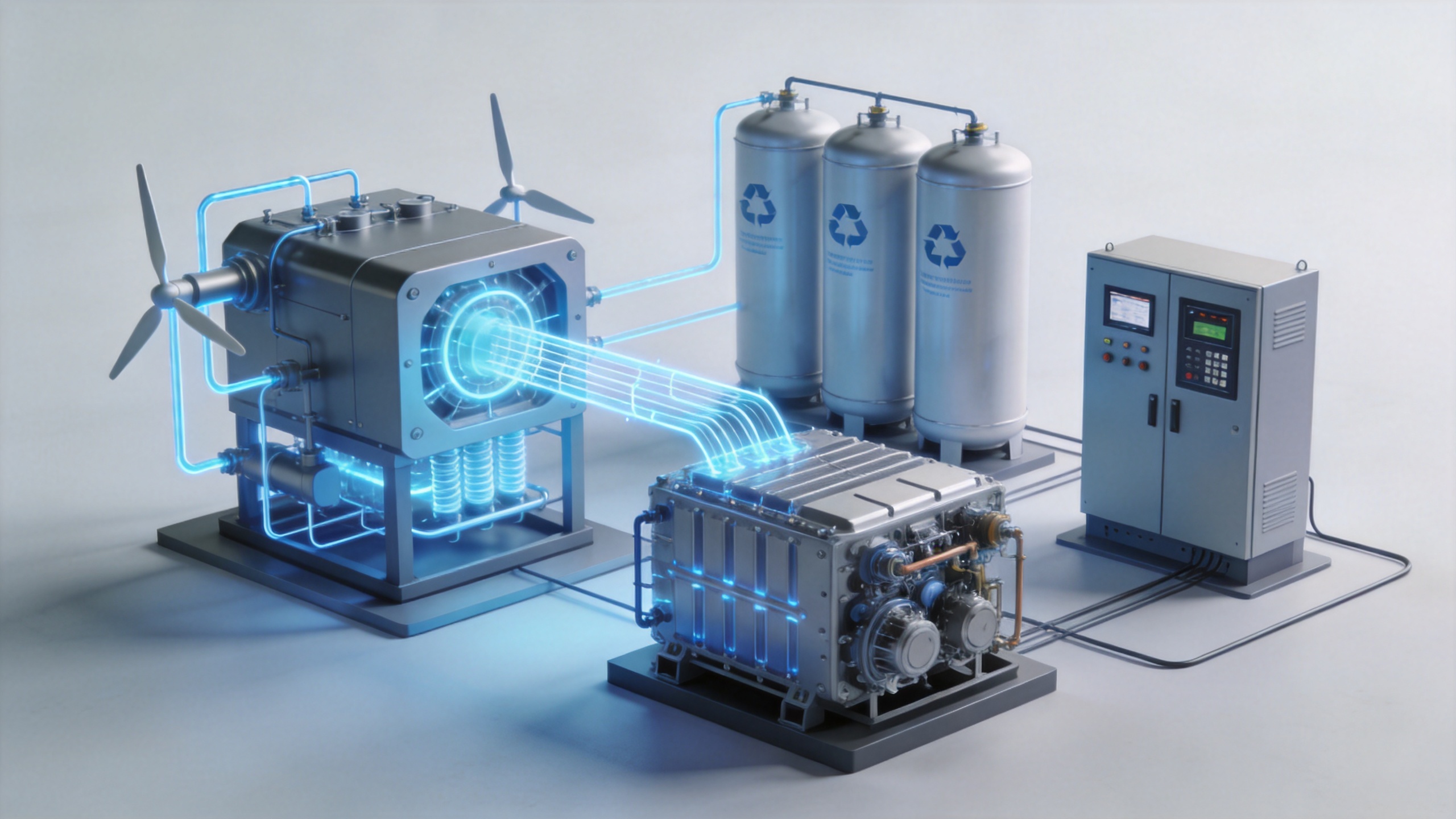
Why the microgrid controller is the connecting layer
In a hydrogen microgrid, the controller turns individual assets into a system. It should not be treated as a final add-on after equipment selection. The control strategy needs to reflect the site’s load pattern, the variability of renewable input, the desired resilience role, utility-interconnection conditions, and the operating limits of the hydrogen equipment in a hydrogen gas power plant.
A controller may, for example, need to decide whether excess renewable electricity should charge a battery, feed an electrolyzer, be exported, or be curtailed. Later, it may need to determine whether a fuel-cell block should support a critical load, reduce a peak, or remain available for a resilience event. These decisions depend on measurements and constraints rather than a single “run” command.
That is why the phrase hydrogen processing plant should include its control and data interfaces. Teams should document what signals are available from each block, who owns dispatch decisions, and how safety-related conditions affect normal energy-management logic.
System boundaries to clarify before sizing equipment
Awareness-stage planning is most useful when it identifies questions that must be answered before a design is treated as a proposal. Start with the electrical load: which loads are essential, how do they vary by hour and season, and what quality or continuity requirements apply? Then clarify the energy source: what electricity will be available for production, under which operating periods, and with what grid constraints?
Next, define the hydrogen side. A storage decision is not only a volume decision; it affects site layout, system connections, monitoring, maintenance planning, and the conditions under which energy can be delivered to the end-use equipment. If the project considers combustion-based conversion, the evaluation should also address applicable emissions, water-use, and permitting topics. These are design questions, not reasons to assume a particular outcome.
Finally, agree on the resilience claim. A site may want backup capability, peak support, renewable-energy time shifting, or a combination of these roles. Each one creates a different dispatch priority and data requirement. Describing that role early helps avoid an oversized equipment list with an undefined operating purpose.
A practical architecture conversation for B2B projects
For technical and procurement teams, a structured conversation is often more productive than starting with a single capacity number. Begin with a one-line use case: “convert available electricity into stored hydrogen and return it to selected loads under defined conditions.” Then map the project across energy source, production, storage, conversion, control, safety, and service interfaces.
Where a site needs an integrated reference point, review the available hydrogen microgrid integrated solution information alongside the site’s real load and operating data. The page can support a technical discussion, while the final equipment scope still needs to follow verified interfaces and project conditions.
Useful questions include:
- What is the expected source and availability pattern of electricity for hydrogen production?
- Which loads matter during normal operation and during an interruption?
- What storage duration and delivery profile are being evaluated for the hydrogen gas power plant?
- Which subsystem provides the supervisory control logic, and what data must it receive?
- Which safety, access, maintenance, and permitting boundaries belong in the early project definition?
Conclusion: view the hydrogen gas power plant as an integrated energy pathway
A hydrogen gas power plant is most useful as a systems concept: electricity enters, hydrogen stores energy under defined conditions, and a controlled conversion path can later support electrical loads. The connection between production, storage, and a microgrid is the operating logic that matches each asset to real site conditions.
For hydrogen microgrid systems, a sound starting point is to define the energy flows, the system boundary, and the decision rules before assigning performance expectations. That approach helps engineering, procurement, and operations teams discuss a hydrogen processing plant in practical terms—and identify the data needed for the next design step in a hydrogen gas power plant project.