
 EN

AEM Electrolyzer Price Guide: What Industrial Buyers Should Compare
A headline AEM electrolyzer price is a starting point, not a project budget. In industrial hydrogen projects, similar MW ratings can conceal different equipment boundaries, operating assumptions, and delivery responsibilities. The useful question is not simply “What does an AEM electrolyzer cost?” It is “What is included, at what hydrogen output condition, and what will still need to be engineered at site?”
It is intended for procurement teams evaluating 1 MW to 5 MW-class hydrogen production equipment. It provides a practical comparison framework for AEM electrolyzer quotations and helps separate stack or skid pricing from the wider cost of a workable hydrogen-production system.
Start with the price boundary, not the number
An AEM electrolyzer price may refer to a stack, a packaged electrolyzer unit, a containerized system, or a scope that reaches into the site connection points. Each description can be legitimate, but they are not interchangeable. Before comparing $/kW, ask every supplier to identify the quotation boundary in a one-page scope matrix.
| Scope area | Questions to put in the RFQ | Why it changes comparability |
|---|---|---|
| Stack and modules | How many stacks are supplied? What replacement approach is assumed? | Stack architecture and service planning affect lifecycle budget. |
| Power conversion | Is the rectifier included? What are the AC input and power-quality requirements? | A price may exclude substantial electrical equipment. |
| Water and electrolyte handling | What feedwater quality, treatment equipment, and loops are in scope? | Utility requirements affect both package scope and site design. |
| Gas treatment and delivery | What purity, pressure, drying, separation, and compression are included? | Hydrogen at the stack outlet is not necessarily ready for the next process. |
| Controls and safety | Which PLC, analyzers, ventilation, detection, interlocks, and remote data connections are supplied? | Control and safety responsibilities can move between the equipment supplier and EPC team. |
Industry references commonly group power systems, water treatment, gas handling, controls, instrumentation, and safety under balance of plant. That is why an AEM electrolyzer price should state whether it is equipment-only, packaged-system, or installed-project scope.
Compare capacity on the same operating basis
“1 MW” does not tell a buyer enough on its own. Ask for the rated DC power, AC power at the point of connection, expected hydrogen production rate, operating pressure, ambient design conditions, and the assumptions behind the performance figures. A supplier should make clear whether the quoted output is nominal, contractually specified under defined conditions, or a design estimate.
For a 1 MW to 5 MW procurement, normalize each offer in a comparison sheet using the same columns: AC input, hydrogen flow, outlet pressure, water quality, operating window, and included auxiliary loads. This prevents an apparently lower AEM electrolyzer price from reflecting scope that has simply moved outside the offer.
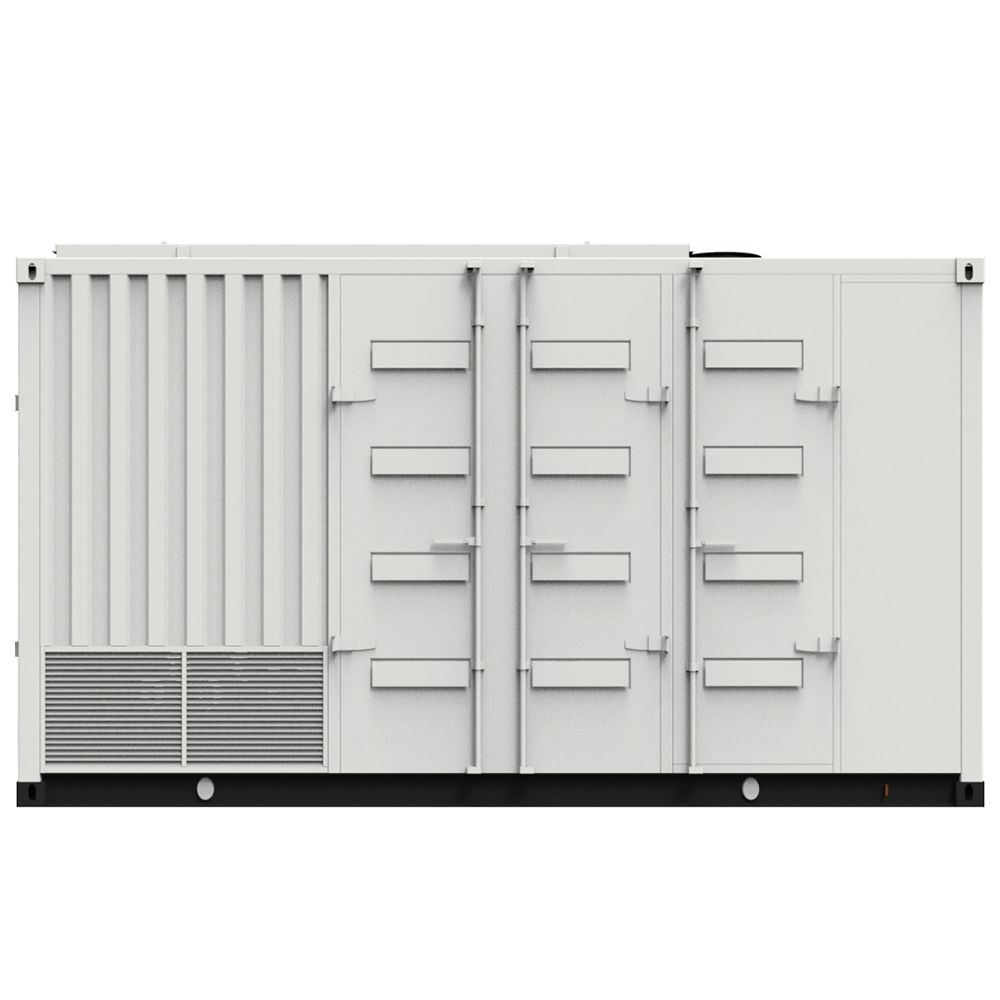
If you are evaluating a packaged project platform, review the available 1MW-5MW hydrogen production system information alongside the supplier’s defined equipment boundary. Use it as a starting point for a technical discussion rather than as a substitute for a project-specific scope confirmation.
What AEM-specific technical choices can affect cost?
An aem electrolyzer is often evaluated for its potential material pathway, including reduced reliance on iridium compared with some alternative architectures. That potential does not remove the need to examine membrane, catalyst, electrode, sealing, and stack durability assumptions. At industrial scale, the procurement team should ask what evidence supports the proposed operating window and what service actions are expected over the project period.
- Stack design and maintainability: Request the stack count, replacement procedure, outage assumptions, and service-access requirements.
- Operating pressure: Higher pressure may alter downstream compression needs, but it can also change equipment design and safety considerations.
- Water and electrolyte requirements: Confirm treatment quality, consumption, disposal, and who supplies the associated equipment.
- Dynamic operation: If power follows renewable generation, define ramping, turndown, start-stop frequency, and the applicable performance conditions.
- Controls integration: Clarify communication protocols, plant supervisory-control interfaces, alarms, and data ownership before award.
These questions turn an AEM electrolyzer price discussion into an engineering comparison. They also reduce the chance that essential interfaces emerge only after purchase order placement.
Use $/kW carefully: equipment cost is not installed cost
Published electrolyzer cost figures often use different technologies, dates, currencies, capacities, and project scopes. For example, a U.S. Department of Energy PEM scenario used an installed capital-cost baseline of about US$2,000/kW in 2022 dollars, with a sensitivity range of US$1,500–2,500/kW. This is helpful context for understanding the difference between installed capital cost and a supplier package quotation; it is not an AEM quotation benchmark.
When comparing offers, record the denominator as clearly as the numerator. Is the figure based on MW of AC input, MW of DC stack power, or hydrogen output? Is it an ex-works equipment figure, a delivered package figure, or a site-installed estimate? An AEM electrolyzer price becomes meaningful only after those labels are attached.
Build a quotation comparison sheet your project team can use
A decision-stage RFQ should require each bidder to complete the same schedule. In addition to commercial terms, include the fields below:
- Process duty: target hydrogen flow, purity, pressure, annual operating hours, and load profile.
- Battery limits: a marked P&ID or boundary diagram identifying incoming power, water, hydrogen, oxygen, drains, and control interfaces.
- Performance conditions: temperature, pressure, water quality, electricity assumptions, and measurement method.
- Electrical scope: transformer, rectifier, switchgear, harmonic mitigation, cables, and commissioning responsibility.
- Gas scope: separation, drying, purification, compression, storage interface, venting, and analyzers.
- Lifecycle support: commissioning, operator training, spare parts, remote support, response times, and stack-service assumptions.
- Commercial assumptions: delivery terms, taxes, packing, transport, installation exclusions, schedule, warranty boundary, and change-order rules.
Score the bids in two layers: first, whether each item is included; second, the risk and cost of the excluded work. A lower initial AEM electrolyzer price may still create a higher project total if power, gas conditioning, controls, or integration must be added later.
Questions to ask before selecting a supplier
Before final selection, hold a joint technical-commercial clarification meeting. Ask suppliers to walk through their exclusions and the handover points between their package and the EPC or site team. Request a preliminary layout, utility list, commissioning sequence, and a list of customer-supplied items. For an aem electrolyzer project, it is also sensible to ask how the supplier validates performance after installation and how operational data will be captured during acceptance.
Procurement teams should avoid relying on retail-style listings or a single published $/kW figure. Those values can be useful for early screening, but industrial purchasing requires like-for-like duty, boundary, and lifecycle assumptions.
Make the purchase decision on total project clarity
The most useful AEM electrolyzer price is a transparent, comparable price—not necessarily the lowest one. Define the process duty, lock the package boundary, normalize operating assumptions, and make exclusions visible. This gives project, engineering, and commercial teams a common basis for comparing 1 MW to 5 MW proposals and planning the work that remains outside the supplier package.
For buyers assessing a scalable hydrogen-production concept, a structured discussion around the 1MW-5MW system can help identify the information needed for a project-specific RFQ. Final configuration, site connection points, and commercial terms should be confirmed directly with the equipment supplier.